Treaty Relationships, Mi’kmaq History
October 1 marks Treaty Day in Nova Scotia and the beginning of Mi’kmaq History Month, an important opportunity to celebrate Mi’kmaw history, culture, knowledge and contributions, and to deepen our understanding of the treaty relationships that continue to shape life in Mi’kma’ki.
Coming immediately after the National Day for Truth and Reconciliation, Treaty Day reminds us that learning about our shared history must also include understanding the commitments that continue into the present.
The Peace and Friendship Treaties established relationships intended to allow the Mi’kmaq and settlers to live together in peace and friendship. They remain an important part of our relationship today. Understanding them means recognizing that treaty rights are not simply matters of history. They are living rights, and respecting them is part of our shared responsibility.
That connection is particularly important from a human rights perspective. At their heart, human rights ask us to recognize the inherent dignity of one another, to challenge discrimination and inequality, and to create the conditions in which people and communities can participate fully in society while maintaining their identity, culture and traditions.
Mi’kmaq History Month gives all of us an opportunity to learn more about the Mi’kmaq as the original people of Mi’kma’ki, but also to celebrate the strength and vitality of Mi’kmaw communities today. Mi’kmaw history is not something confined to the past. Mi’kmaw language, knowledge, leadership, creativity and culture continue to enrich this province and shape its future.
Throughout October, I encourage Nova Scotians to seek out opportunities to listen and learn, to participate in Mi’kmaq History Month events, and to deepen their understanding of the Peace and Friendship Treaties and what it means to be treaty people.
Treaty Day reminds us of the relationships we have inherited. What matters is how we choose to honour those relationships today and carry them forward.
The preceding is a message from Shawna Y. Paris, Chair of the Nova Scotia Human Rights Commission
Resources
- Mi’kmaq History Month
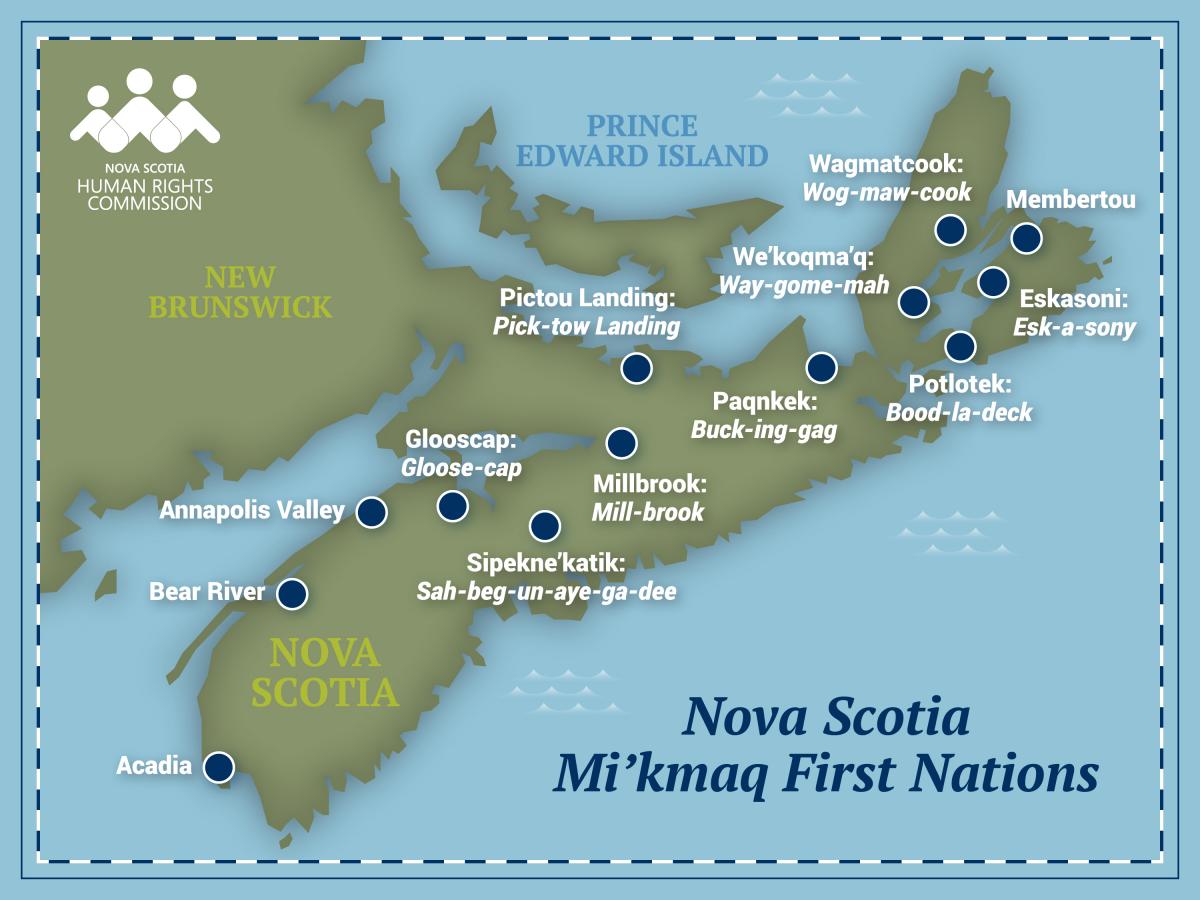
- Mi'kmaq First Nations Map (Nova Scotia)
- Fact sheet, Peace and Friendship Treaties in the Maritimes and Gaspe
- Mi'kmaw Place Names Digital Atlas
- Mi'kmaw language teachings from Bernie Francis (CBC/YouTube)
- Online Mi'gmaq/Mi'kmaq Language Dictionary
- Truth and Reconciliation | Halifax Public Libraries
- National Centre for Truth and Reconciliation
- Mi’kmawey Debert Culture Centre
- Office of L'nu Affairs
- Union of Nova Scotia Mi’kmaq
- United Nations Declaration on the Rights of Indigenous Peoples