Honouring Indigenous Histories, Rights and Resilience
June is National Indigenous History Month in Canada, an opportunity to recognize and celebrate the rich histories, cultures, knowledge systems, and contributions of First Nations, Inuit, and Métis peoples. It is also a time for reflection, learning, and renewed commitment to reconciliation grounded in truth, respect, and action.
Here in Mi’kma’ki, the ancestral territory of the Mi’kmaq, this month invites all Nova Scotians to deepen our understanding of the histories and experiences that continue to shape this province and country today.
National Indigenous History Month is not only about looking to the past. It is also about listening to Indigenous voices in the present and recognizing the ongoing work of advancing Indigenous rights, self-determination, dignity, and justice.
The rights to language, culture, community, land, education, health, safety, and self-determination are fundamental human rights that must be protected and respected. Yet Indigenous peoples in Canada continue to experience the ongoing impacts of colonialism, systemic discrimination, intergenerational trauma, and inequitable access to services and opportunities. Meaningful reconciliation requires more than acknowledgement. It requires sustained action, relationship-building, and a willingness to confront uncomfortable truths.
At the same time, this month is also an opportunity to celebrate the strength, resilience, leadership, and cultural vibrancy of Indigenous communities.
Across Nova Scotia, there are countless opportunities to learn through Indigenous storytelling, art, music, teachings, language, ceremony, and community events. Learning from Indigenous perspectives strengthens our collective understanding of this land, our shared history, and our responsibilities to one another as Treaty People.
The Nova Scotia Human Rights Commission encourages all Nova Scotians to take time this month to learn, reflect, listen, and engage in ways that advance understanding, respect, and reconciliation.
By doing so, we help build a province rooted in dignity, inclusion, and human rights for all.
The preceding is a message from Joseph Fraser, Director and CEO of the Nova Scotia Human Rights Commission.
Resources
- (Video) The United Nations Declaration on the Rights of Indigenous Peoples explained
- National Indigenous History Month: Government of Canada
- Nova Scotia's Office of L'nu Affairs
- Mi'kmaw Place Names Digital Atlas
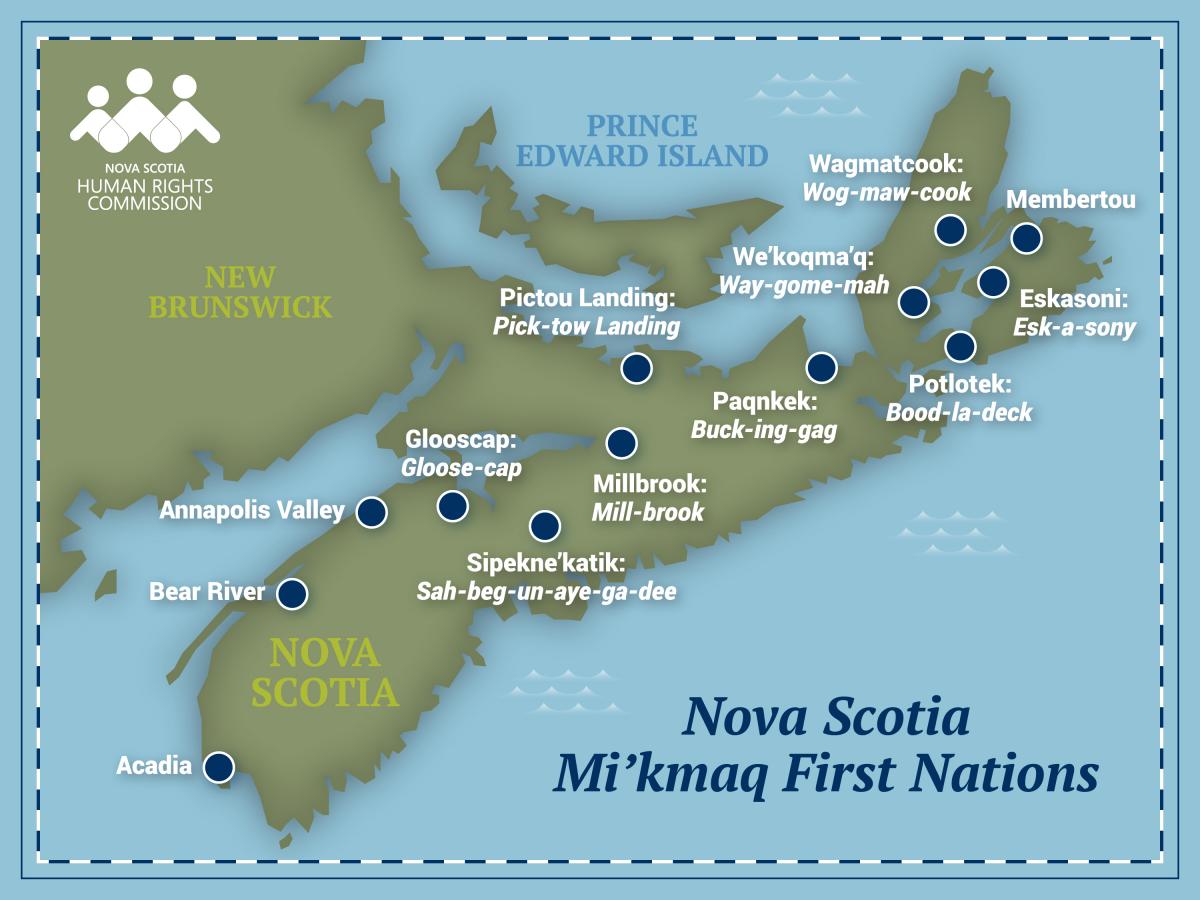
- Mi'kmaq First Nations Map (Nova Scotia)
- Online Mi'gmaq/Mi'kmaq Language Dictionary
- National Indigenous History Month: A Virtual Experience (Halifax Public Libraries)
- Mi'kmaq History Month
- Truth and Reconciliation | Halifax Public Libraries
- Mi’kmaw History & Culture | Halifax Public Libraries
- Indigenous cinema at the NFB - Indigenous Cinema
- National Centre for Truth and Reconciliation
- Mi’kmawey Debert Culture Centre
- Union of Nova Scotia Mi’kmawaq
- United Nations Declaration on the Rights of Indigenous Peoples